

Movement work that creates carryover, not just homework
Rehabilitation / Corrective Exercise
Exercise-based follow-through designed to make treatment gains stick and build more durable movement capacity over time.
The bridge between feeling better and functioning better
Relief matters, but it is not the whole job.
Rehabilitation and corrective exercise help turn treatment gains into something more durable. The goal is not just to feel better for a day or two. The goal is to build a body that can hold onto progress and handle life better over time.
What it Does
- rebuild movement capacity
- improve loading tolerance
- restore strength, coordination, and motor control
- reduce protective threat-driven patterns that keep the body stuck
- reduce the chance that the same pattern keeps coming back
- create better real-world function, not just temporary relief
When it works best
Rehab often works best after treatment has created a window of opportunity.
Once pain is lower, movement is cleaner, or the body is less guarded, exercise becomes the tool that helps those gains hold. It is also where the body can start learning better motor control and moving with less threat response built into the pattern.
That is how short-term change starts becoming long-term function.
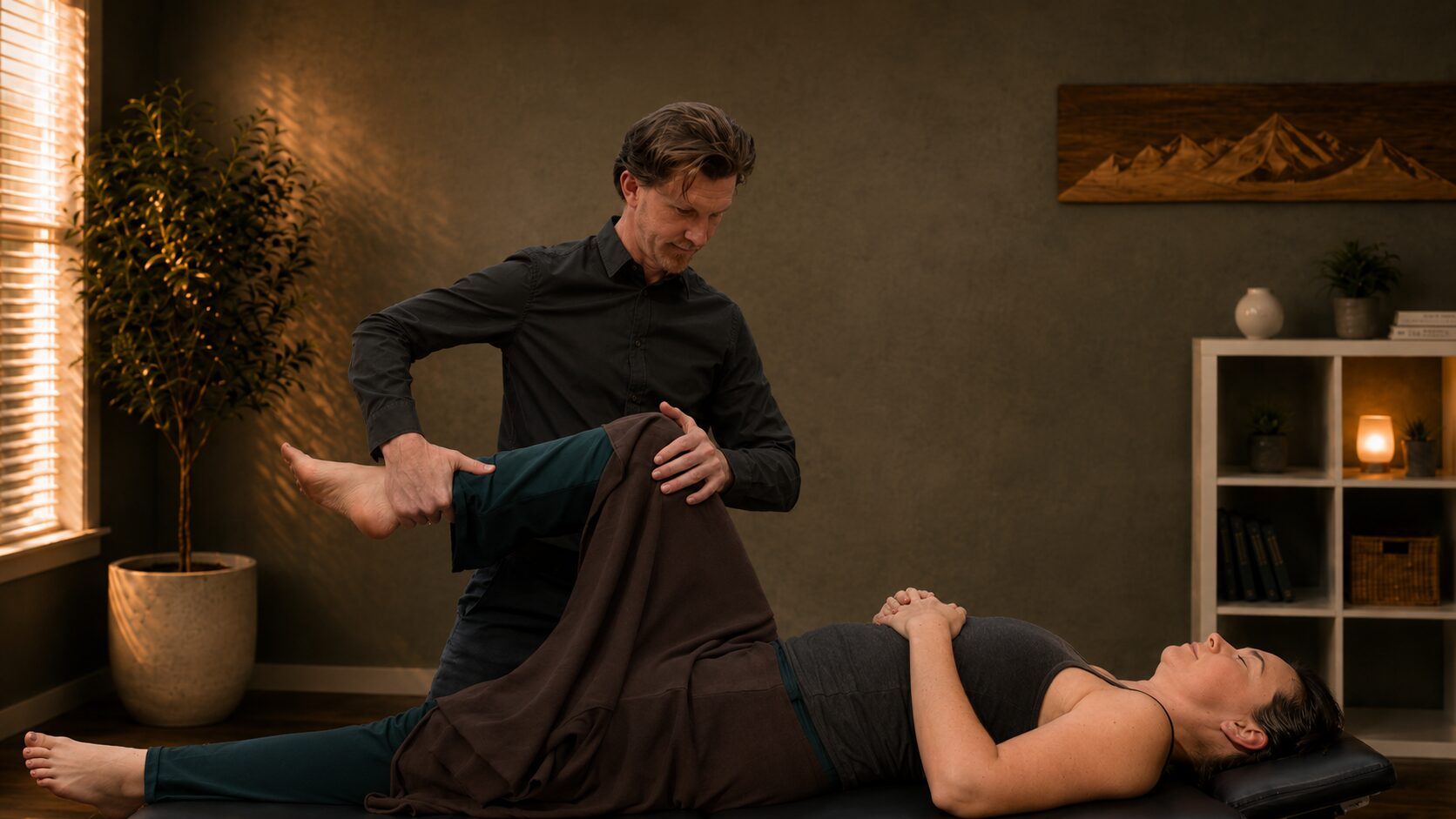
Why it works better when it is tailored
This is not about handing out generic exercises.
It is about understanding the pattern, choosing the right starting point, and progressing in a way the body can actually absorb. Good rehab should match the case, the recovery stage, and the real demands of daily life.
That includes helping the body improve motor control, reduce unnecessary guarding, and build a movement pattern that feels more stable and less threatened.
The goal is not just to do exercises. The goal is to build a body that handles life better than before the pain started.
Learn more about how I use rehab inside a bigger recovery plan
Subscribe to the newsletter for a deeper look at how I combine corrective exercise with chiropractic care, movement analysis, soft-tissue treatment, and other tools to build recovery that actually lasts.