
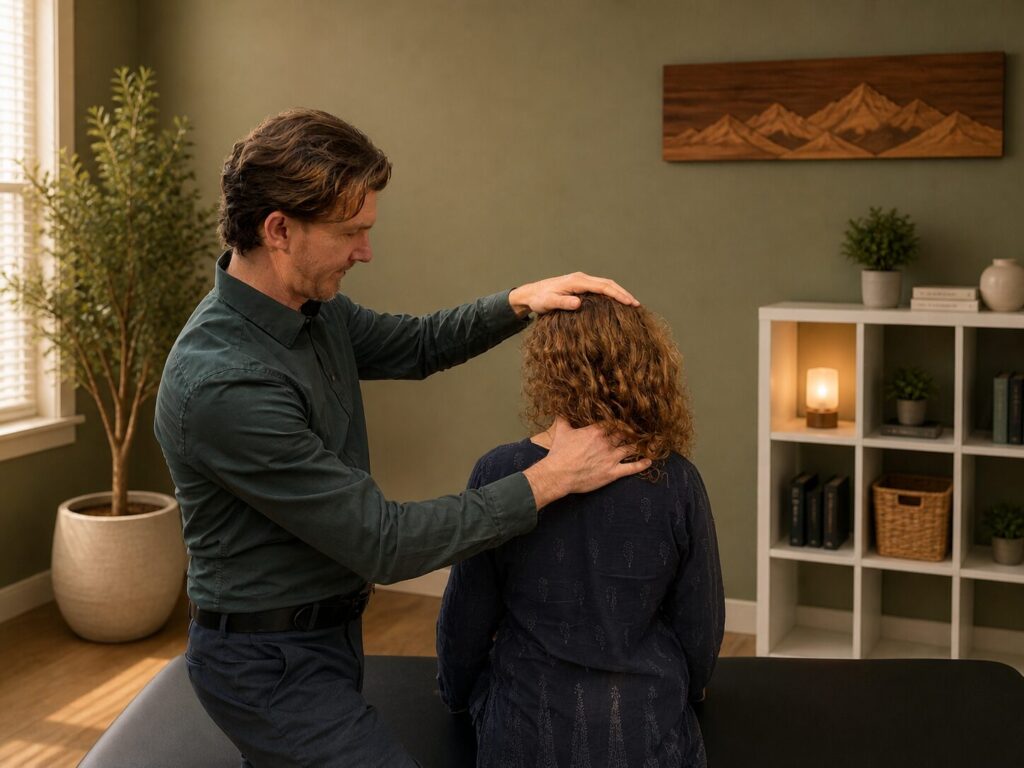
Neck pain care built around why it keeps returning
Neck Pain
Neck pain is often more than a local problem. Lasting relief comes from understanding how your nervous system protects, how your structure compensates, and how daily habits keep the pattern alive
Why neck pain can linger
Neck pain often keeps coming back when the local tissue problem is only part of the story. The rest of the pattern may involve work posture, screen time, sleep position, shoulder blade control, jaw tension, upper back stiffness, or old injury history that never fully resolved.
Common drivers
- posture and screen habits
- upper back stiffness
- shoulder blade dysfunction
- stress and muscle guarding
What makes it worse
Long static positions, poor recovery, repetitive strain, and trying to push through a pattern the nervous system is already guarding against.
What I look for
The local neck problem, plus how the upper back, shoulders, nervous system, and daily habits are shaping the same pain pattern.
Not all neck pain starts the same way
Some people wake up stiff and unable to turn their head. Others notice headaches, shoulder tension, numbness, or pain that comes and goes. The pattern matters. Below are common places people begin based on how their symptoms behave and what seems to make them better or worse.

The goal is not just to calm the neck down. The goal is to understand why the nervous system keeps guarding it in the first place.
Neck Pain FAQ’s
Neck pain is common, but the cause is not always obvious. Here are answers to some of the most common questions I hear in my Ashland office
What causes neck pain?
Neck pain can come from muscles, joints, discs, nerves, arthritis, old injuries, stress, repetitive posture, or movement habits. Sometimes the pain is local to the neck, while other times it spreads into the shoulders, head, jaw, or arms.
Why does my neck pain travel into my shoulder or arm?
Pain, tingling, numbness, or weakness into the shoulder or arm may suggest irritation of a nerve in the neck. In some cases, muscles and joints can also refer pain into nearby areas. The pattern of symptoms matters more than the location alone.
Can neck pain cause headaches?
Yes. Many headaches are influenced by the neck, especially when symptoms start at the base of the skull, worsen with neck movement, or come with stiffness and muscle tension. Neck dysfunction and headaches often overlap.
Can TMJ or jaw pain be related to neck pain?
Often, yes. The jaw and neck work closely together. Jaw tension, clenching, headaches, and neck stiffness frequently influence one another, which is why both areas may need to be considered.
Do I need an MRI or X-ray for neck pain?
Not always. Many people improve without imaging. X-rays or MRI may be appropriate when symptoms involve significant trauma, progressive weakness, unexplained symptoms, or certain nerve-related findings.
Why does my neck hurt more at the computer?
Long periods in one position can make sensitive tissues more irritated, especially if movement variety is limited. Often, the issue is less about “bad posture” and more about staying in one position too long.
Can poor posture cause neck pain?
Posture can contribute, but it is rarely the whole story. Neck pain is often influenced by strength, movement habits, stress, sleep, prior injuries, and nervous system sensitivity—not posture alone.
Why does my neck crack or grind?
Clicking or grinding sounds are common and often related to joints or soft tissues moving. On their own, these noises are not always concerning, but if they come with pain, locking, numbness, or headaches, it may be worth evaluating.
Why do I wake up with neck pain?
Sleep position, pillow setup, jaw clenching, prior injuries, stress, and joint stiffness can all contribute to morning neck pain. Sometimes the issue is the neck itself, while other times it reflects a broader movement or nervous system pattern.
When should I worry about neck pain?
Seek prompt medical attention if neck pain follows major trauma, causes significant arm weakness, changes balance, affects bowel or bladder function, or comes with fever, unexplained weight loss, or severe neurological symptoms.

Get the free neck pain guide
Download the guide for a clearer explanation of why neck pain lingers, what often gets missed, and how an integrated approach—addressing both nervous system and mechanical factors—leads to lasting relief.