
Gentle Chiropractic
Low-force adjusting techniques designed for patients who need effective spinal care without high-velocity manipulation
Not all chiropractic feels the same
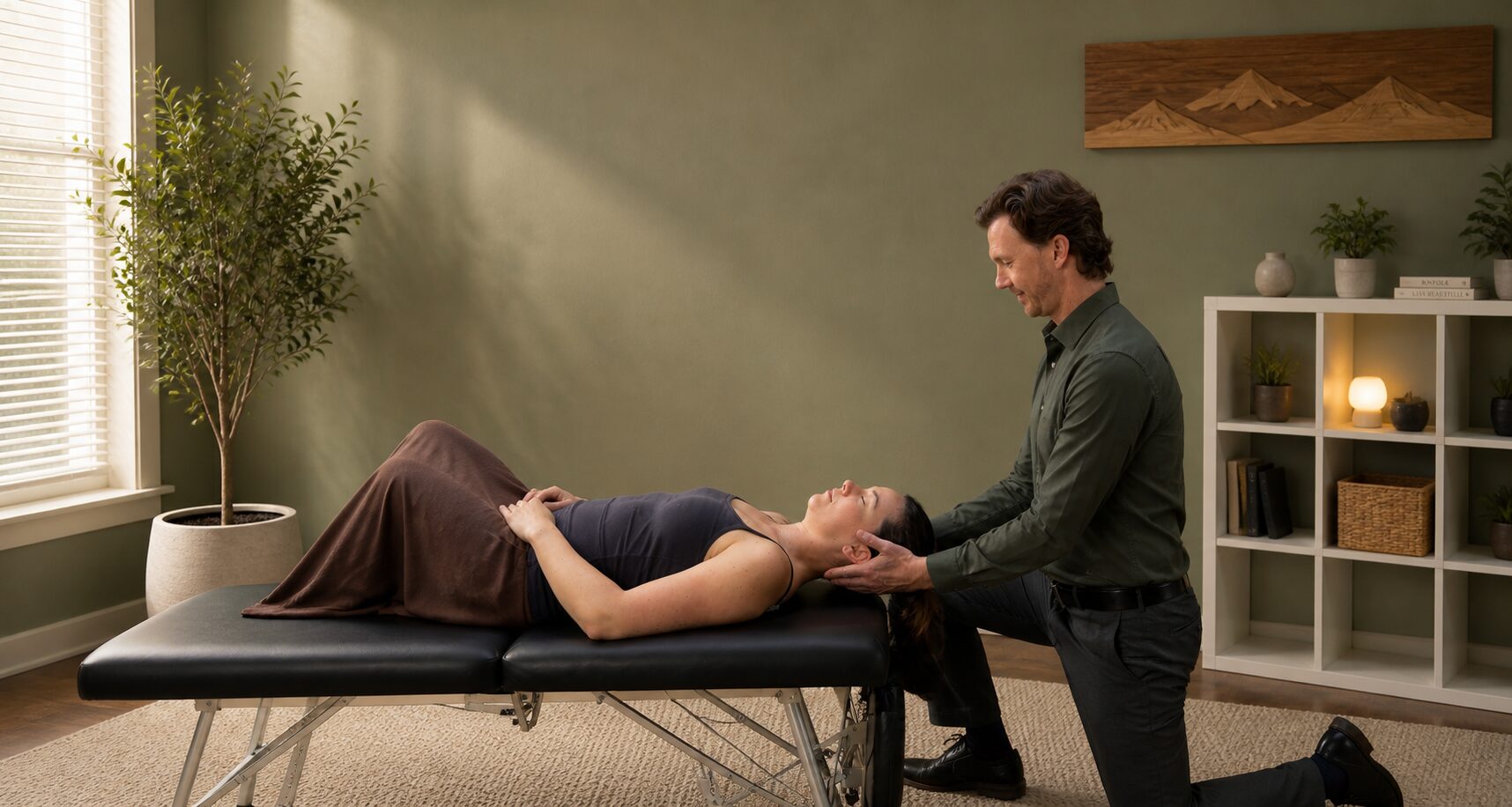
Gentle chiropractic refers to a set of low-force, instrument-assisted, and soft-mobilization techniques that produce the same neurological and mechanical benefits as standard adjusting — without the thrust or audible release. The approach is adapted to what the patient can tolerate and respond to well.
These techniques are commonly used for patients who are pain-sensitive, post-surgical, elderly, pregnant, or who simply prefer a gentler style of care. The goal is always the same: restore joint mechanics, reduce nervous system irritability, and help the body move better.
When gentle chiropractic fits best
Sensitivity to high-velocity adjustment
Some patients have had bad experiences with forceful adjusting, or their tissue reactivity makes it inappropriate. Low-force techniques achieve the same joint mobilization without triggering a protective response.
Post-surgical or fragile presentations
After surgery, hardware placement, or in the presence of osteoporosis or fragility, gentle techniques allow the nervous system and joint function to be addressed without loading compromised structures.
Preference for a quieter approach
Some patients simply respond better to gentler input. Matching the technique to the person is part of what makes care more effective — there is no one-size-fits-all approach to adjusting. This is personalized.
Techniques we use
Activator — instrument-assisted
A small handheld instrument delivers a precisely controlled, low-force impulse to the joint — producing the neurological input of an adjustment without any manual thrust or torque.
Drop table and blocking
Drop-piece tables and pelvic blocking use gravity and body position to create movement through the spine and pelvis — effective for structural corrections without any rapid or forceful contact.
Low-amplitude joint mobilization
Slow, oscillatory joint movement performed within or at the end of the available range — restoring mobility and reducing pain without the velocity of a standard adjustment.
What patients experience
- Effective joint mobilization without discomfort or apprehension
- Improved movement and nervous system regulation
- Accessible care regardless of pain sensitivity or fragility
- Treatment matched to what their body can actually respond to
I will build a plan around what works for you
Every care plan is built around the patient in front of me — including the adjusting style. If gentle techniques are the right fit for your situation, that is what we will use.