
Balance, Neck, and Post-Collision Symptoms
Dizziness After a Car Accident
This page focuses on how dizziness after a crash may relate to the neck, movement control, headaches, and delayed whiplash patterns.
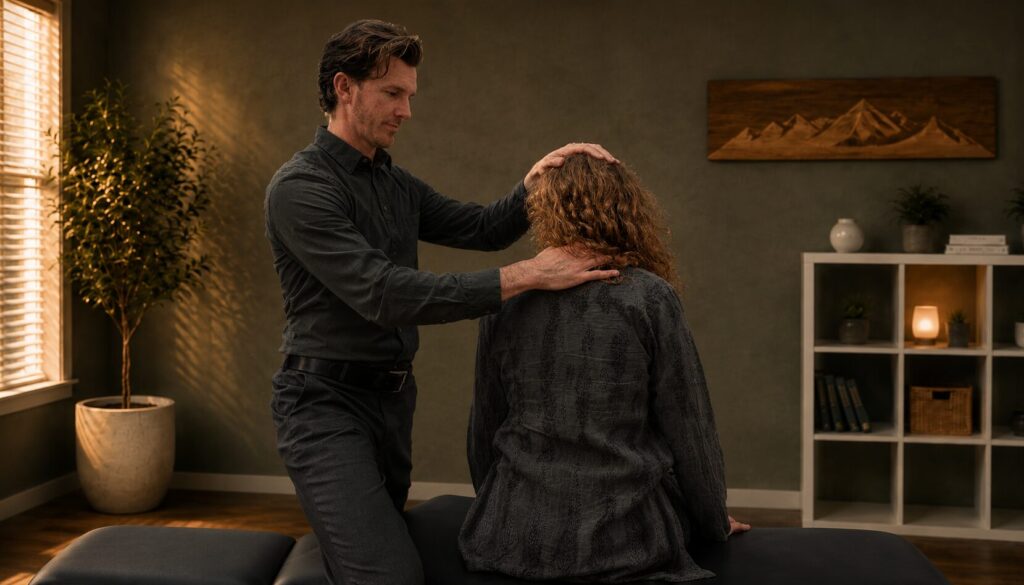
Image placeholder: replace this section with a relevant supporting image for this page.
Why dizziness can happen after a crash
Dizziness after a collision is not always simple. In some cases, it may be tied to the neck, to altered movement control, to headache patterns, or to the broader stress response that follows trauma.
- Dizziness with neck stiffness
- Headaches plus feeling off balance
- Symptoms when turning the head
- A sense of disorientation after a rear-end collision
When people notice it
- Later the same day
- The next morning
- When turning the head
- When symptoms build alongside neck pain or headache
Why this symptom deserves attention
Dizziness is easy to minimize, but it can be an important clue that your recovery needs a more complete evaluation. It is especially worth paying attention to when it appears with neck pain, headaches, or motion sensitivity.
How Dr. Noah Volz approaches post-collision dizziness
Rather than assuming one simple cause, the goal is to understand how the neck, movement patterns, symptom behavior, and overall recovery picture fit together.
This is also an area where generic care can miss the point. When dizziness is tied to the neck, movement sensitivity, headache patterns, or a broader post-collision picture, it helps to have a chiropractor who is actually looking at those relationships.
Related pages
This Ashland post-collision cluster is designed to work together. These pages should support each other in both user flow and local search visibility.
- Car Accident Chiropractor in Ashland, OR
- Oregon PIP Coverage for Chiropractic Care After a Car Accident
- Whiplash Treatment in Ashland, OR
- Neck Pain After a Car Accident in Ashland
- Back Pain After a Car Accident in Ashland
- Dizziness After a Car Accident
- Shoulder Pain After a Car Accident in Ashland
- Shockwave Therapy for Auto Accident Injuries
- Direct Current Therapy for Auto Accident Recovery